Let’s be honest: You are scrolling through Pinterest-perfect homes on social media, while looking around your own space can feel discouraging. But here’s what professional designers know: true economy home decor is not about settling for a “cheap” look; it is about smart investments that make every dollar work harder for you.
We have helped hundreds of people successfully transform their spaces while staying within tight budgets. Basically, you don’t need a bunch of money to create a home that feels expensive. By the end of this article, you will understand how to stretch every dollar while ensuring your home remains durable, stylish, and uniquely yours.
Redefining Economy Home Decor: The “Cost Per Use” Mindset
Stop chasing the lowest price tag. Start calculating cost per use.
When most people hear the term economy home decor, they immediately think of the lowest price tag. However, that’s not what economy home decor is really about. Think about it this way: That 40$ coffee table from a big-box store might seem like a steal, but what if it starts to wobble after three months? Congratulations, you’ve successfully wasted your money. A $100 solid wood table from a secondhand shop? That’ll outlast your next three apartments.
Studies show that 37% of budget furniture buyers regret their purchase within the first year due to quality issues.
Psst: Prioritize materials like solid wood, metal, and quality engineered woods over particle board that crumbles when you move.
The Free 30-Minute Transformation
Before spending a single cent, rearrange your furniture. That’s cost you nothing. This single action creates an instant psychological refresh.
- Conversation Circles: Group your seating to encourage interaction.
- Pathways: Make sure that there is enough open space to walk comfortably through the room.
- Decluttering: Visual clutter is the enemy of luxury. The solution is simple: use the 50% rule when decluttering. Remove half of what’s on your surface. Keep what you really want, remove all other things.
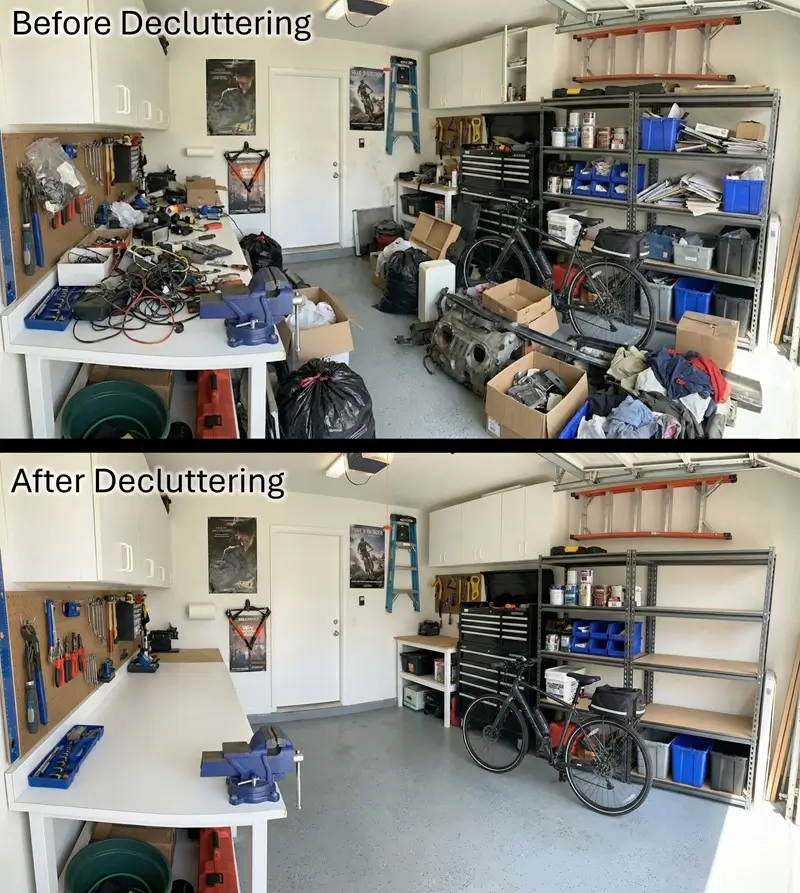
Psst: Use free apps like Planner 5D or even a simple room sketch to test layouts before moving furniture. This prevents the expensive mistake of buying pieces that block doorways or make rooms feel cramped.
Thrift Stores: Your Private Design Showroom
Insider Secret to Economy Home Decor: Learn to see bones, not blemishes. Because once you do, thrift stores, flea markets, and digital marketplaces become goldmines for high‑quality materials.
Imagine this: There is a scratched wooden dresser at the thrift shop. Solid construction, dovetail joints, real wood. It just needs three hours. You can turn that into an $800 statement piece with sandpaper and paint. Focus on items made from materials that age beautifully and accept paint well, such as solid wood, brass, glass, or natural stone.
Check estate sales and online marketplaces (like Facebook Marketplace) on Sunday evening when sellers drop prices to avoid hauling items back. For instance, I once found a mid-century credenza for $75 that now anchors my entire living room.
Three DIY Projects That Actually Look Expensive

You don’t need an expensive workshop and items to create custom decor. Some of the most impactful economy home decor projects require nothing more than a hot glue gun and a vision.
- DIY Fabric Canvas Wall Art: Frame eye‑catching textiles such as vintage scarves, fabric remnants, or even stylish wrapping paper in thrift store frames. Cost: $3-8 per piece. Result: Looks like gallery art worth $50+.
- Textile Hacks: Use fabric remnants to sew (or glue) custom throw pillow covers. You can use high-end velvet or silk for the front and cheaper cotton for the back to save 50% on material costs while keeping the luxury feel.
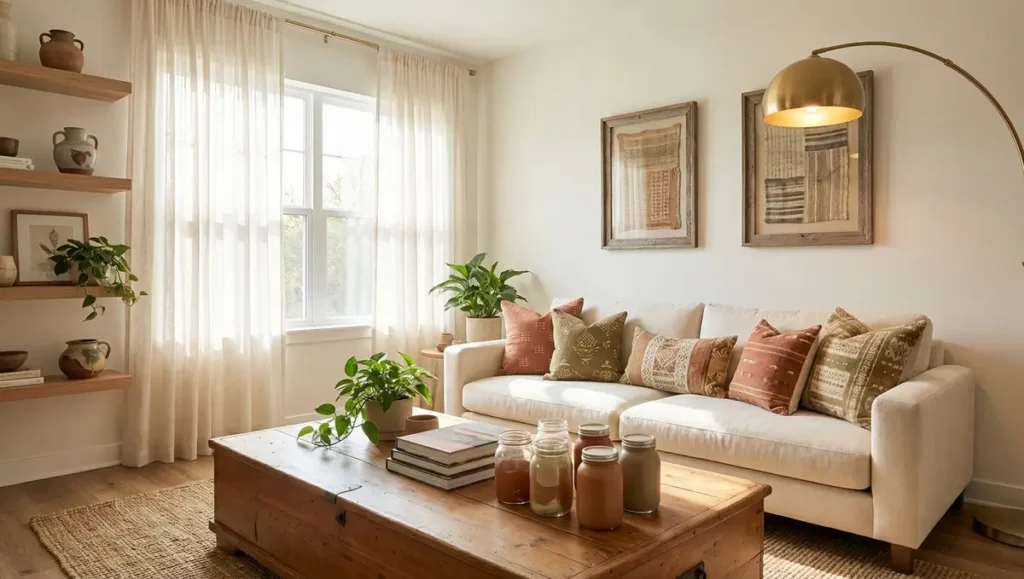
- Painted Glass Jar Collection: Don’t throw those glass jars away. Paint them with a bit of matte spray paint or twine, and group them on shelves or use them as vases. The uniform finish creates a curated collection look that instantly feels intentional and stylish.
The “Save and Splurge” Strategy: One Hero Piece Changes Everything
Make your home look expensive with a simple trick: invest in one anchor piece such as a quality sofa, a statement light fixture, or bold artwork, and surround it with budget‑friendly accessories. This creates a powerful visual effect. Guests notice the leather armchair and assume the thrifted side table and DIY pillows are just as premium. Your budget stretches where it matters while the overall space feels luxurious.
Renter-Friendly Upgrades (Keep Your Deposit!)
Many renters feel limited when it comes to investing in their space, but today’s market offers stylish, flexible solutions that require no long-term commitment. The following examples show how renters can personalize their homes without violating lease terms.
- Peel-and-Stick wallpaper: This can transform accent walls in kitchens or bathrooms into stylish focal points, and it can be removed cleanly when you move out.
- Removable hooks and tension rods: Hang heavy curtains and art without drilling a single hole.
- Lighting Swaps: Replacing a “builder-grade” plastic light fixture with a thrifted chandelier can change the entire mood of a room. Keep the original fixture in a box to replace it when you move out.
The Two Changes That Make Everything Look Expensive
Lightning: It is an easy trick. Replace cool-white bulbs with warm-toned bulbs (2700K-3000K). Add floor and table lamps in corners. Professional designers use layered lighting to create depth, which removes the boring, warehouse-like feeling.
Curtains: Hang them “high and wide.” Mount rods a few inches (4-6 inches) above your window frame and extend them past the sides. This makes windows look 30% larger, and ceilings feel taller. This trick works well for small rooms as well.
Budget Store Secrets
Discount stores are goldmines if you think creatively:
- Buy mismatched frames and spray-paint them the same color. This simple trick makes them look like a curated gallery.
- Group small mirrors together to create one large statement mirror that reflects light.
- Use inexpensive bins for hidden storage, keeping only beautiful items visible.
Remember that the key to “economy home decor” is making the ordinary look intentional.
Nature: The Free Design Element
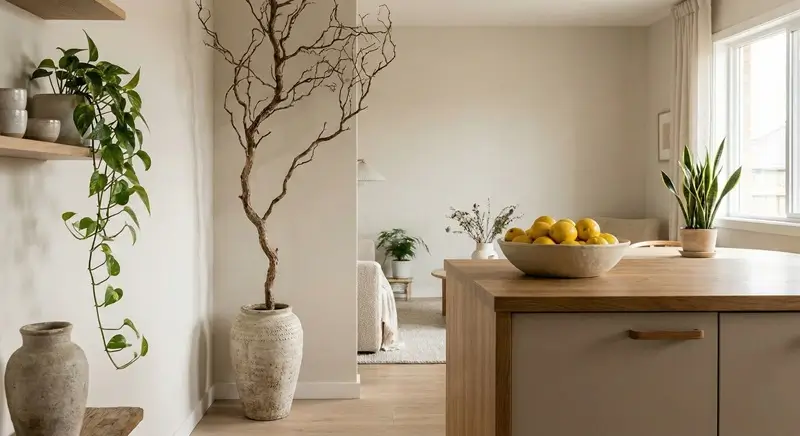
A tall branch in a floor vase. A bowl of lemons on the counter. Low-maintenance plants like pothos or snake plants in corners. Natural elements add life, texture, and color without costing anything. They soften hard furniture lines and make spaces feel lived-in rather than staged.
Use Technology Before You Buy
Simulate furniture placement using AR apps like IKEA Place, Houzz, or Amikasa before making a purchase. Visualize paint colors on your actual walls through your phone. This eliminates expensive mistakes like buying a rug that’s too small or a sofa that overwhelms your room. There are many AI tools available, and you can take advantage of them as well.
The Real Secret
Building a beautiful home is a marathon, not a sprint. Every successful “economy home decor” project I’ve seen focuses on lasting value over short-term trends, creative reuse over buying new, and strategic planning over impulse shopping.
Make every purchase purposeful, no matter if it’s a $5 thrift or a $500 splurge. A smarter, data-driven approach doesn’t just make your home affordable; it makes it extraordinary.
But remember, a truly beautiful home engages all the senses. If you’re looking to create a peaceful atmosphere that goes beyond aesthetics, explore Bible Quotes About Home: 17 Verses for Peace and Blessing for spiritual inspiration. And if you’re refreshing an older space, don’t forget that fresh scents matter too. Check out How to Make an Old House Smell Good: 9 Natural Ways for budget-friendly solutions that complete your home transformation.
Frequently Asked Questions (FAQs)
Q1: What is home decoration in home economics?
Home decor is the art and science of improving a home’s interior spaces through the thoughtful selection and arrangement of furniture, furnishings, colours, and textures to achieve a space that is functional, comfortable, and visually appealing.
Q2: How does the economy affect interior design?
Economic downturns push people toward economy home decor solutions like DIY projects, thrift shopping, and upcycling.
Q3: What is the 3-5-7 rule of decorating?
The 3-5-7 rule is an interior design technique where decorative objects are grouped in odd numbers. By arranging items in threes, fives, or sevens, you create a natural rhythm and visual balance that feels more effortless compared to symmetrical pairings.
Q4: What does home decor include?
Home decor includes furniture, lighting, textiles (curtains, rugs, pillows), wall art, mirrors, plants, and decorative objects that enhance your space’s look and function.
Q5: How can I start decorating my home on a really tight budget?
Declutter and reorganize what you own to refresh your space. Use free resources like nature and printable art, shop thrift stores for key pieces, and embrace DIY projects. Don’t rush. Focus on one room or even one corner at a time.
Q6: What are the most impactful changes I can make for economy home decor?
Three game-changers: upgrade to warm lighting, hang curtains high and wide, and declutter. These cost little but make spaces look significantly more expensive.
Q7: How can I avoid my budget decor looking “cheap”?
Choose quality materials (wood, metal, glass) over plastic, maintain a consistent color scheme, and use fewer well-chosen items.