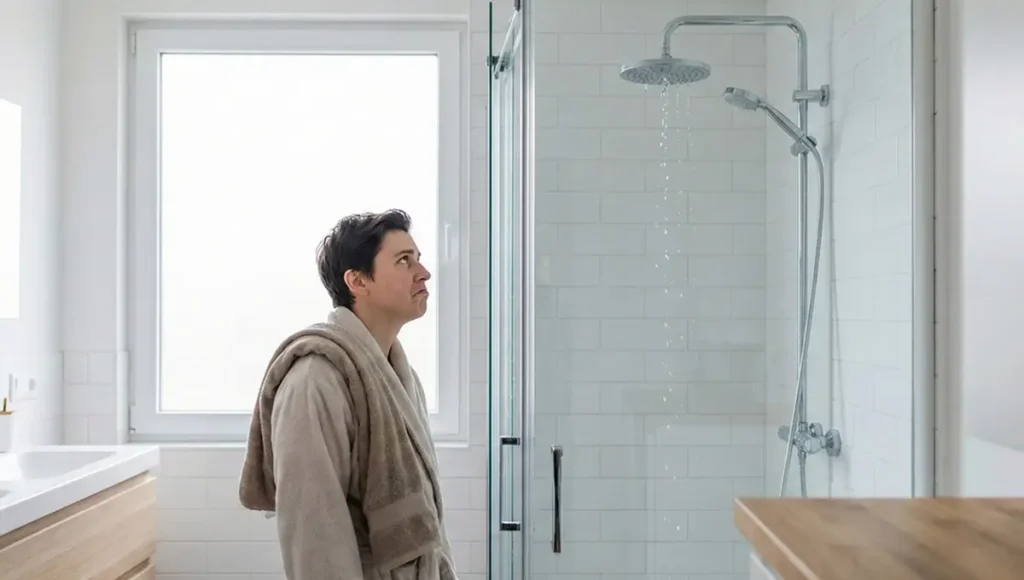
Picture this: You’re rushing to get ready for work, you step into the shower, and instead of the refreshing spray you need to wake up, you get a sad little trickle. Sound familiar? Low water pressure is one of those household headaches that affects everything from your morning shower to doing the dishes, and honestly, it can make your whole house feel less functional than it should be. So, how to increase water pressure in your home when it’s driving you crazy?
The good news is you don’t have to call an expensive plumber. Here’s how to increase water pressure in your home with some practical, professionally recommended methods that bring your showers and faucets back to life.
However, the issue is that what appears to be a pressure problem might actually be something entirely different. We spoke with university civil engineering research teams that have spent years evaluating residential plumbing systems, and in most cases where homeowners experience weak water flow, the issue is not a true pressure problem. According to plumbing industry research and standards set by organizations like the EPA and American Society of Plumbing Engineers, the real culprits are usually restricted flow, aging pipes, or pressure-regulating devices.
The best part is, once you understand what’s actually happening with your plumbing, how to increase water pressure in your home becomes totally manageable to fix. Let’s walk through it together, step by step.
Understanding the Difference: Pressure vs. Flow (It Really Matters!)
Before you start repairing or adjusting anything, we need to clear up some confusion that trips up a lot of flocks.
Water pressure is the force pushing water through your pipes. You can think of it as the muscle behind the water. We can measure it in pounds per square inch (psi).
Water flow is the actual volume of water you’re getting. Basically, it is how much water comes out over time, measured in gallons per minute (GPM).
Here is where it gets interesting. You could have perfectly sufficient pressure, but terrible flow if your pipes are clogged with mineral buildup or there is a restriction hiding somewhere in your system. This is the reason why figuring out how to increase water pressure in your home starts with understanding what’s actually going on behind the scenes.
According to our university’s civil engineering research teams, “Most people think they have a water pressure issue when they’re actually dealing with flow restriction. Testing pressure and flow rate gives you the complete picture.”
How to Increase Water Pressure in Your Home: 9 Expert-Approved Steps
Our team recommends working through these steps systematically for the best results. This way, nothing gets missed and the process stays organized.
Step 1: Test Your Actual Water Pressure
Let’s get some real numbers. Grab an inexpensive water pressure gauge from any hardware store in your area. It would cost you around $15.
Here’s what our team recommends:
- Screw the gauge onto an outdoor faucet or hose connection.
- This is very important. Make sure nothing else in the house is using water (no dishwasher, no one flushing toilets, etc.)
- Turn the faucet all the way on and check the reading
What the numbers actually mean
- 40-60 psi: This is the ideal water pressure for most homes.
- Below 40 psi: Yep, that explains your weak shower situation.
- Above 60 psi: It is not low pressure, but high pressure that could damage your plumbing fixtures over time. You can get more information from here.
If your pressure reads normal but your fixtures still feel weak, the problem is flow restriction somewhere in your system. No worries, we’ll figure it out.
Step 2: Test Your Flow Rate (This Reveals Hidden Problems)
This simple test can reveal restrictions in your pressure gauge won’t catch.
- Grab a 5-gallon bucket and open the stopwatch app on your smartphone.
- Turn your faucet on full blast and start timing.
- Stop the stopwatch when the bucket is full.
- Divide gallons by minute to get your GPM.
Testing both pressure and flow gives you the complete diagnostic picture. It forms the basis of what you’re trying to figure out when learning how to increase water pressure in your home. It’s similar to running a blood test on the body that reveals what’s really going on.
Psst: If both tests show normal, but you still have concerns, test at the problem fixture location directly, not just at an outdoor spigot. Pressure can vary throughout your home.
Step 3: Check Your Main Valves
I know this sounds almost too simple, but you’d be surprised how often this is the problem. Someone did maintenance work, turned a valve partially closed, and forgot to open it all the way back up.
Check both of these :
- The main shut-off valve is usually located near where the water line enters.
- If you have access to the water meter valve, check that as well.
Psst: If just one fixture has low pressure, check the shut-off valves specific to that part.
Step 4: Play Detective and Hunt Down Leaks
No matter how big the leaks are, they can steal pressure from the rest of your systems. They’re sneaky; you might not even see water anywhere.
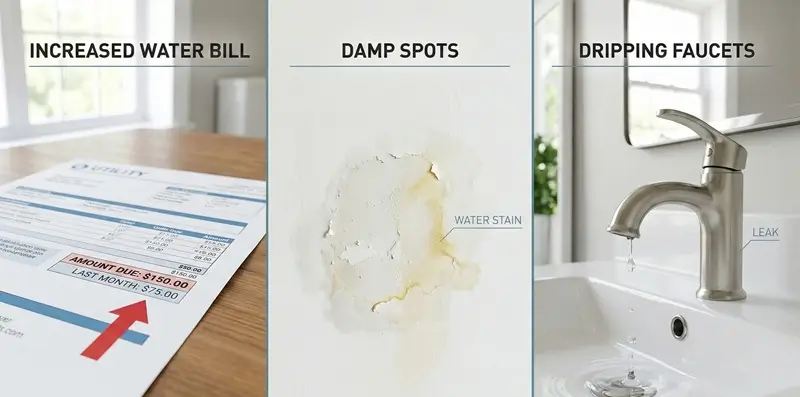
Warning signs :
- Your water bill crept up for no reason.
- Damp sports on walls, ceilings, or near pipes and showers.
- Noticeable pressure drops whenever someone turns on another faucet.
Research on residential plumbing systems shows that water leaks create pressure losses, which lower pressure across the entire plumbing system. That is why this step matters so much when working out how to increase water pressure in your home.
Step 5: Clean Your Fixtures (The Easiest Fix That Works)
This is simple to do and solves the problem more often than most people expect.
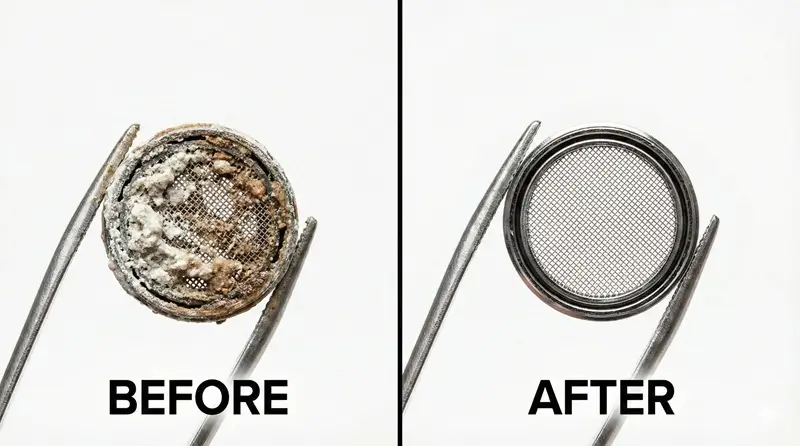
What to clean :
- Faucet aerators
- Showerhead nozzles
- Any inline filters or screens you can access.
How To Do It :
Unscrew these parts, soak them in white vinegar for an hour, and scrub slowly with an old toothbrush. We have seen showerheads that looked fine but were 80% clogged inside.
Step 6: The Truth About Flow Restrictors
Modern faucets and showerheads have built-in flow restrictors to save water. They’re usually required by law, but they can make your water pressure feel weak.
The truth you need to know :
- Removing them increases flow and makes pressure feel stronger. But if you remove the flow restrictor, it uses more water, costs more money, and might violate local codes as well.
- It doesn’t actually increase your home’s water pressure; it just changes how the water comes out.
Keep that in mind when considering how to increase water pressure in your home through this method. We recommend trying every other solution first, before going for this, because restrictors are there for good reasons.
Step 7: Adjust Your Pressure Reducing Valve (PVR)
Most homes have a PRV. A bell-shaped device that protects your plumbing from damage when the city water pressure runs too high. It is a bell-shaped device usually located where the main water line enters the house.
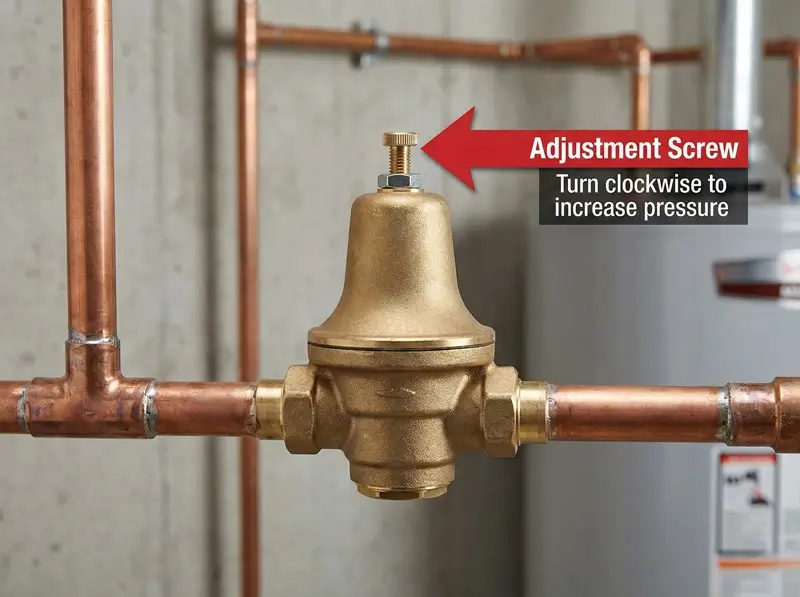
- Find the PVR (usually near the water meter).
- Loosen the lock nut on top.
- Turn the adjustment screw clockwise slowly.
- Test the pressure after each small adjustment.
- Stop when you reach 50-60 psi
Psst: Keep this adjustment moderate. Increasing the pressure too high can burst pipes, wreck appliance seals, and create leaks that’ll cost way more to fix than your original problem.
Step 8: Consider Your Pipe Condition
Here is something that you don’t want to hear. If your house is older, the pipes themselves might be the problem. Galvanized steel pipes, common in homes built before the 1960s, corrode from the inside out. Not only that, but also mineral buildup in pipes over decades, narrowing the diameter and restricting the water flow.
Typical pipe lifespans :
- Galvanized steel: 20-50 years
- Copper, brass, iron: 40-100+ years
If your house has old galvanized pipes, no amount of tinkering will give you great pressure. Replacing them is the only real solution. This is often the deciding factor in how to increase water pressure in your home for older properties.
Step 9: Install a Pressure Booster System
If nothing works for you, the problem is with your municipal water supply. It might be consistently weak. Maybe you’re at the end of a main water supply line, or your house sits on a hill. If so, a water pressure booster system might be the only solution.
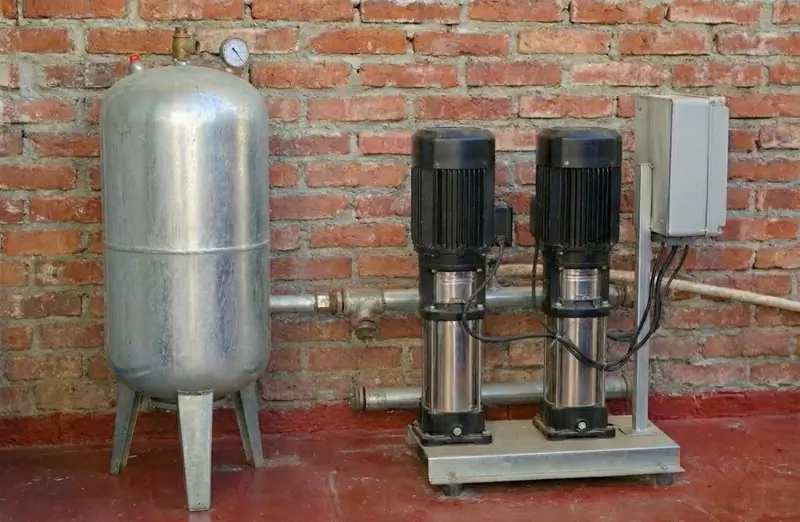
What it does :
- Uses an electric pump and pressure tank.
- Actively boosts water pressure throughout your home.
- Works great for houses at the end of water lines or on hills.
This is a proven solution backed by hydraulic engineering research, but it’s not a DIY job. Get a professional to install it so the system stays balanced and safe.
Frequently Asked Questions (FAQs)
1. How to increase water pressure in your home without calling a plumber?
Start by testing your actual water pressure and flow rate to know if there is a problem. If so, clean all your fixtures, making sure valves are fully open. If it’s still not working, carefully adjust your PRV if you have one. These steps solve most problems.
2. Is my city’s water supply always to blame?
Nope. Most of the time, issues come from your side. Check for clogged fixtures, partially closed valves, aging pipes, or restrictors. Municipal supply problems are actually pretty rare.
3. Can low water pressure damage my appliances?
Yes, actually. Appliances like dishwashers and washing machines need enough pressure to function properly. Consistently low pressure can cause them to run longer cycles, work less efficiently, and potentially wear out faster.
The Bottom Line
Figuring out how to increase water pressure in your home really comes down to being methodical. To understand what you’re dealing with, test your flow and pressure first. Examine basic components such as clogged aerators and valves, and regularly clean your fixtures. If necessary, carefully adjust your PRV.
Professional solutions like pipe replacement or a booster system may be required for some homes, particularly older ones with corroded pipes or decades of mineral buildup. But most people find their answer somewhere in the steps above. Understanding your system is more important than attempting random fixes. If you do that, your water pressure will return to normal, and you won’t have to deal with annoying faucets or weak showers.
And once your home is functioning properly again, it’s worth focusing on comfort too, such as learning how to make your house smell good.
References
The technical information in this guide draws from peer-reviewed research published in: